Ardai Ildikó
textilművész
Ardai Ildikó
textile artist
1942.01.01,Budapest
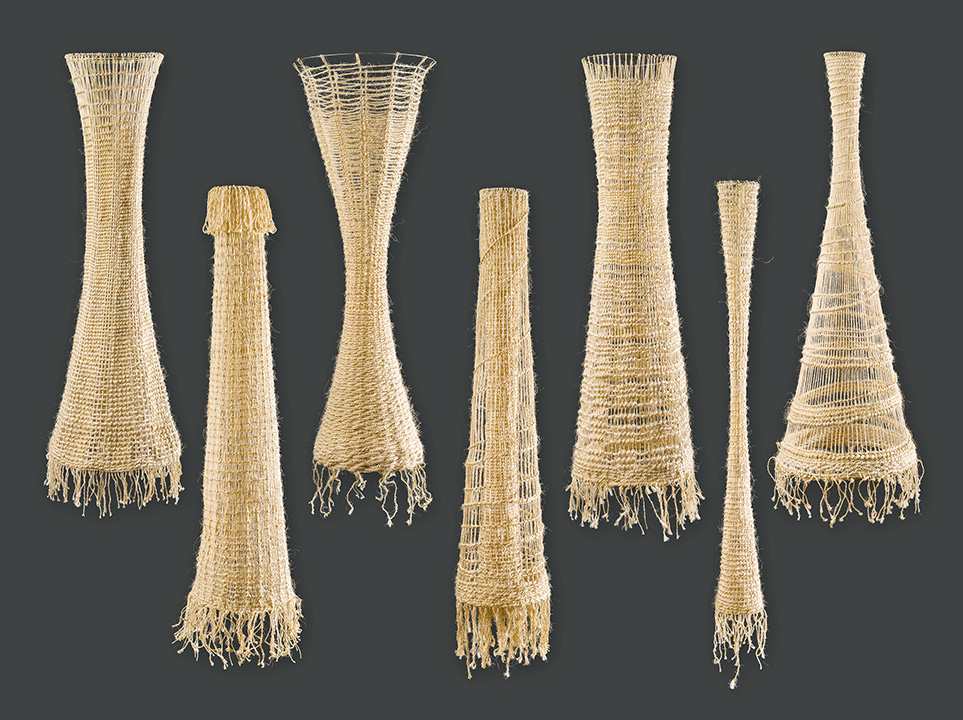
1968-ban diplomázott a MIF szövött anyag és gobelintervező szakán. Kezdetektől a fonás és a szövés rokonsága érdekli: textiljeit szizálból fonja és szövi. Később tértextiljeinek anyagát zöldvesszőre váltotta, ezzel a vesszőfonások új műfaját teremtette meg. Az 1970-es években kezdett a székely festékes szőnyeg kutatásába, majd feldolgozásába. 1998-ban Ferenczy Noémi-díjat kapott, 2001-ben elnyerte az Ipari Formatervezési Nívódíjat, 2003-ban pedig az 1. Alkalmazott Textil Triennálén a NKÖM díját. 2018-ban NKA alkotói támogatást kapott. 2021-ben a szombathelyi VII. Nemzetközi Textilművészeti Triennálén a Kulturális Alapítvány a Textilművészetért különdíjjal jutalmazta. Művei hazai és erdélyi közgyűjteményekben is megtalálhatók.
She graduated in woven textile and tapestry design from the Hungarian Academy of Applied Arts in 1968. Her main interest has been the connection between spinning and weaving from the start: she spins and weaves her textiles using sisal. She began using wicker for her later, spatial textile works, thus creating a brand new genre of wicker-weaving. In the 1970s she turned her attention to researching Sekler hand-woven carpets. She received the Noémi Ferenczy Award in 1998, and won the Niveau Prize for Industrial Design in 2001 and the Prize of the Ministry of National Cultural Heritage at the 1st Applied Textile Triennial in 2003. She was granted a grant for artists from the National Cultural Fund of Hungary in 2018. She was awarded the Special Prize of the Cultural Foundation for Textile Arts at the 7th International Textile Art Triennial in 2021. Her works can be found in Hungarian and Transylvanian public collections.
1998. Ferenczy Noémi-díj, 2001. Ipari Formatervezési Nívódíj, 2003. NKÖM díj, 2018. NKA alkotói ösztöndíj, 2021. szombathelyi VII. Nemzetközi Textilműves Triennálé a Kultúrális Alapítvány a Textilművészetért különdíj